
What classes are in Lootbound?
Four: Warrior, Paladin, Witch, and Bard. Some writeups say Jester — same support role, Bard is the achievement and select-screen name.

This page is the Lootbound classes roster: four roles, one hero you click, two companions you recruit mid-run. Lootbound (ArtDock / Dreland Enterprises) starts every expedition solo. Recruits follow the same equip rules and then act on their own. Named abilities stay TBA. Verified August 15, 2026 · Steam.
| Fact | Detail |
|---|---|
| Platform | Steam · Win / macOS / Linux · Xbox Series |
| Genre | Pixel top-down tactical roguelite |
| Mode | Single-player |
| Roster | Warrior · Paladin · Witch · Bard (Jester alias) |
| Start | Solo — one hero, no party micro |
| Recruits | 1.0 observed: two mid-run from the leftover three (Steam: companions join along the route) |
| Control | Hero only — companions resolve from initiative |
| Equip | Same rotate-and-place rule; each body has its own grid |
| Consumables | Hero-only when the 1.0 rule is confirmed |
| Skills | Per-class ability names TBA — pack the role, not a fake skill tree |
The first Lootbound classes decision is the only one you make in the hub. After that, the map hands you rooms, not a respec. Pick the body you can play for several nodes with an empty party.
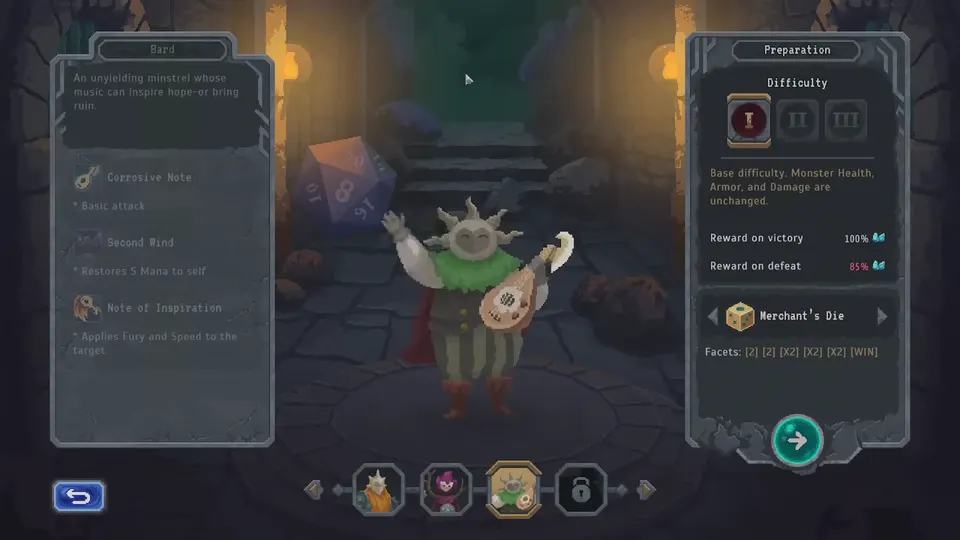
| If you want… | Start as | Why |
|---|---|---|
| The safest first biome | Paladin | Armor, Health, Resistance, Order — you live until a recruit shows |
| Solo kills before a party exists | Warrior | Slash, crit, vampirism — the kit that works with one grid |
| An answer to plated trash | Witch | Acid skips armor; Chaos feeds debuffs. Fragile until a tank arrives |
| A support core | Bard (Jester) | Weak alone. Plan the first companion room as a tank or slasher |
Achievements and the live select screen use Bard. In-run flavor also calls the same character a Jester. This wiki models Bard and notes the alias. There is no fifth class.
Barracks stats help the opener. They do not replace the first strong shape. Leave Game Room dice and Laboratory unlocks until you have died once and know which role you actually lack. The beginner guide is the first-run loop; this page is only the roster.
Once the gates close, you need the four jobs in your head — not a favorite portrait.
Four Lootbound classes. Same inventory rules. Different jobs. Unique skill names stay TBA — judge the role by the stats you pack, not by a skill tree we have not logged.
Warrior is the slash lane: Damage, Critical Chance, Slash, Vampirism. The job is to delete a threat before it swings. Vampirism pays you for attacking, so a Warrior who never swings is a wasted grid. First-run lean: keep Slash clustered and let a later recruit bring Crush or Acid if plated enemies stall you.
Paladin is the survival specialist: Armor, Health, Resistance, Order. Order amplifies healing, armor repair, blessings, and other helpful effects — it is not a damage stat. Pack the Paladin to live and hold, then let someone else finish the health bar. A Paladin you built like a Warrior is just a slow slasher with a holy hat.
Witch is the armor skip: Acid, Chaos, Mana, debuffs. Acid hits Health through plates. Chaos strengthens curses and other negative effects. Do not sprinkle Order onto a Chaos board — the two pull opposite directions. A Witch without Mana discipline burns the kit on trash and has nothing for the biome gate.
Bard is party support, not a third DPS. Community 1.0 play and older writeups also say Jester. Pack Order, Dodge, and instrument-style weapons (names TBA). Judge the Bard by fury / speed / heal-style help the rest of the party actually uses. A Bard with no armor and no recruit is a first-biome wipe — 1.0 openers that start Bard grab Warrior or Paladin first.
Those four jobs only matter if you leave a hole for the map to fill. That is the recruit, not another solo upgrade.
Steam’s rule is the whole party system: every run starts alone, companions join along the route, each one wears a separate kit, and in combat you still only click the hero. 1.0 expeditions usually recruit two of the leftover three and leave one class on the bench — treat that 2/3 split as the observed party size, not a published roster cap.

| Situation | Recruit |
|---|---|
| Hero is Warrior, fights stall on plates | Witch (Acid) — or anyone carrying Crush. Not a second Slash clone |
| Hero is Paladin, kills take forever | Warrior for Slash once armor is gone |
| Hero is Witch, the body keeps dropping | Paladin. Put armor and Order on that grid |
| Hero is Bard, first nodes hurt | Warrior or Paladin first. Witch can wait until you are not naked |
| You already have a tank and a slasher | Witch if plates remain; Bard if the party needs Order / buffs |
| A great shape will not fit the hero | Stash it for the recruit instead of breaking the live board |
Community-observed 1.0 patterns (treat exact thresholds as TBA): a Bard-style support often spends a better buff when an ally is hurt; a Witch-style kit often spends a stronger debuff when one enemy remains. You do not queue those clicks. You seat the stats that make the automatic turn worth taking. Full turn order: combat.
Rotate, seat, keep. A shape that is not on that character’s grid is not in the fight — same rule as the hero. Consumables stay on the hero when that 1.0 rule is confirmed. Do not park the only heal on a companion and wait for the AI to drink it. Packing detail: inventory.
Two bodies in play is when the roster stops being flavor and starts being a comparison. Use the table next, not another portrait paragraph.
Scan this when a companion room opens. It is the decision table for Lootbound classes — role versus first-run risk — not a repeat of the glance list.
| Class | Role | Pack | Solo opener | As recruit |
|---|---|---|---|---|
| Warrior | Physical DPS | Slash · crit · vampirism | Can open alone | Delete a threat |
| Paladin | Tank / Order | Armor · Health · Resistance · Order | Can open alone | Hold the line |
| Witch | Acid / Chaos | Acid · Chaos · Mana · debuff | Needs Mana seated | Skip plates |
| Bard (Jester) | Support | Order · Dodge · instruments (TBA) | Needs a recruit first | Make the other two hit |
1.0 parties usually field three of four. A Bard hero plus Warrior plus Witch is a legal party that never sees Paladin. That is fine if Acid and Slash cover the next biome. It is not fine if you skipped the tank and the Bard still has no armor.
Comparison is useless if the grids are clones. Pack the role next.
Matched by build plan, shared topics, and guide progression — not random related links.
Each Lootbound body is a separate Tetris board. A compact Slash cluster on the Warrior can be a wasted neighborhood on the Paladin. Seat the piece on the character who uses the stat.
| Class | Center the cluster | Leave the rim for | Do not |
|---|---|---|---|
| Warrior | Slash weapon + crit / vampirism contacts | Long bars, extra Base damage | Park Order plates that starve the slash aura |
| Paladin | Armor + Order neighbors | Health / Resistance fillers | Force a huge damage slab that deletes the Order contact |
| Witch | Acid weapon + Chaos contacts | Mana pieces, compact debuff accessories | Stack Order “just in case” |
| Bard | Instrument + Order / Dodge contacts | Party-buff accessories (names TBA) | Score the Bard on personal Slash |
The new body is not a junk drawer for leftover L-shapes. Lift the hero kit, move the role-wrong pieces onto the recruit, and only then seat new loot. One aura slide can flip Slash toward Crush — read the neighbor line on auras before you lock a pretty pack.
A divine-looking slab that isolates the Witch’s Acid contact is worse than a small common that keeps Chaos touching the weapon. Full item names stay TBA. If the pane barely moves when you lift the piece, it is occupying a cell the role needed.
Three packed roles still fail if they all do the same job. The next section is the party, not a fourth portrait.
1.0 parties usually field three of the four Lootbound classes. Cover one kill lane, one armor answer, and one way to stay alive. Exact party names stay unranked — these are first-run jobs, not a fake tier list of “best comps.”
| Hero | First recruit | Second recruit | What the party does |
|---|---|---|---|
| Warrior | Witch | Paladin or Bard | Slash plus Acid; tank or Order last |
| Paladin | Warrior | Witch | Live, then cut Health, then skip leftover plates |
| Witch | Paladin | Warrior or Bard | Acid core; a body that holds; Slash or buffs third |
| Bard | Warrior or Paladin | Witch | Support core; a real body first; Acid once you are not naked |
Slash eats Health after armor is gone. Three Slash grids on a plated elite is three people hitting a wall. Crush or Acid has to live on someone — usually the Witch, sometimes a Paladin crush lean (community-observed, not a locked skill). Damage-type matchups: damage types.
Xbox / Steam goals name the four classes directly: Warrior, Bard, Witch, Paladin, plus “unlock all abilities” for each. Those are meta hunts, not first-run advice. Finish a Difficulty I party that covers roles before you chase The Last General or Lamb of Rebellion. List: achievements.
If the run still dies after a legal trio, it is usually a process error — not a missing legendary name.
Scan this at the companion door. Situation to action — not another loop recap.
| Mistake | Fix |
|---|---|
| Starting Bard and routing past the first companion room | Take Warrior or Paladin at the first recruit pane |
| Cloning the hero kit onto both recruits | One Slash, one Acid/Crush, one Order/armor — builds |
| Waiting for companion hotkeys | There are none — combat |
| Seating the only potion on a companion | Consumables stay on the hero |
| Mixing Order and Chaos on one grid | Paladin/Bard = Order. Witch = Chaos |
| Scoring Bard on personal damage | Read the other two bars after the Bard acts |
| Skipping the leftover class on purpose, then lacking Acid | If plates remain, the bench should not be the Witch |
| Enchanting a temp shape before the recruit exists | Blacksmith the piece that will still sit on a role grid two biomes later |
When the companion pane opens, name the hole out loud: tank, slash, or acid. Pick the class that fills it, then rebuild both grids before the next node.
When that is automatic, the next page is how those three boards become a build — aura contacts, not portraits.
Four: Warrior, Paladin, Witch, and Bard. Some writeups say Jester — same support role, Bard is the achievement and select-screen name.
No. Jester is the Bard alias. In-run flavor uses both words for one character.
Steam: companions join along the route. 1.0 runs usually recruit two of the three leftover classes and field three of four — confirm the live party cap in-game.
No. You click the starting hero. Companions take their own turns from initiative using the kit on their separate grid — combat.
Paladin or Warrior for a clean first biome. Witch if you want Acid early. Bard last unless you will grab a tank or slasher at the first companion room.
Warrior: Slash, crit, vampirism. Paladin: Armor, Health, Resistance, Order. Witch: Acid, Chaos, Mana, debuffs. Bard: Order, Dodge, instruments. Named skills TBA.
Yes — rotate and place, or the piece does nothing. Separate grids. Consumables are hero-only when confirmed — inventory.
Ability unlocks are a meta hunt (Master of Sword, Spark of Inspiration, Wisdom of Chaos, Fury of Faith). Exact trees stay TBA. See achievements.
Turn the roster into builds — aura synergy on three grids. Then combat for hero-only turns.
August 15, 2026
Matched by build plan, shared topics, and guide progression — not random related links.